I Still Ask Dumb City Girl Questions
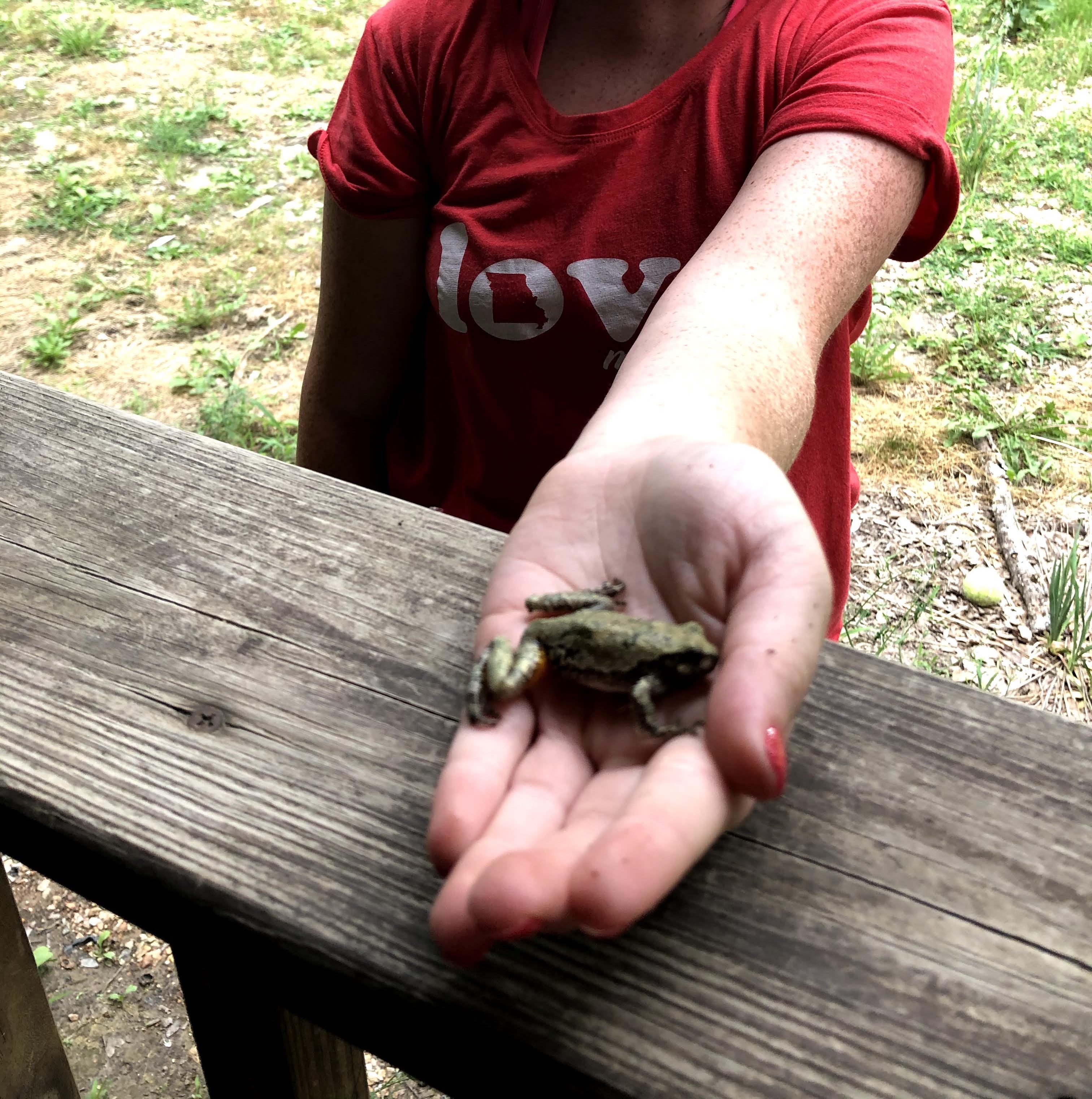
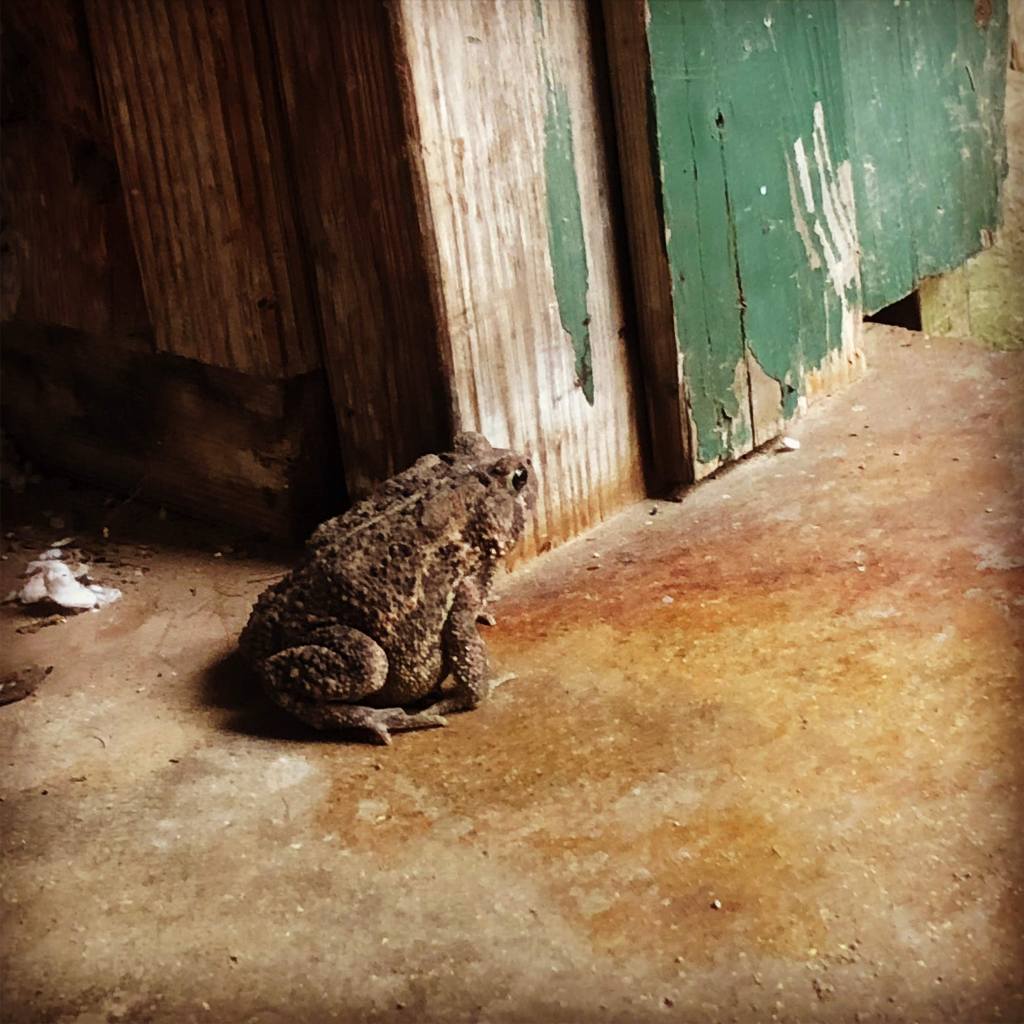
Not long after we moved to the ranch, I found a frog in my kitchen.
I don’t remember exactly who brought it inside. I do remember looking around at the fully grown people in my house and saying something I never imagined would need to be said:
“We do not bring frogs in the house.”
I was very firm about this.
Apparently, I was fighting a losing battle.
One of my earliest Farm Journal entries documented a fairly normal day around here: two chicks had died, I was cleaning dried poo off the bottoms of two others, and one of our mostly feral barn kittens had somehow gotten itself into the kitchen vent.
At the time, Grampa Brown told me I’d “get used to it after a while.”
He was right.
A few years later, there was a brooder full of baby chicks sitting on my kitchen counter.
So, clearly, things have changed.
The kitchen isn’t the only evidence.
When I started writing this Farm Journal, I promised plenty of candid stories, pictures of baby cows, and what I jokingly called my “dumb city girl” questions.
There were a lot of them.
Some were simple. Some probably made Tom wonder exactly what he’d gotten himself into. And some, looking back, weren’t really dumb at all. They were the questions of someone trying to understand a life she hadn’t grown up knowing.
I was also lucky enough to be surrounded by people willing to answer them.
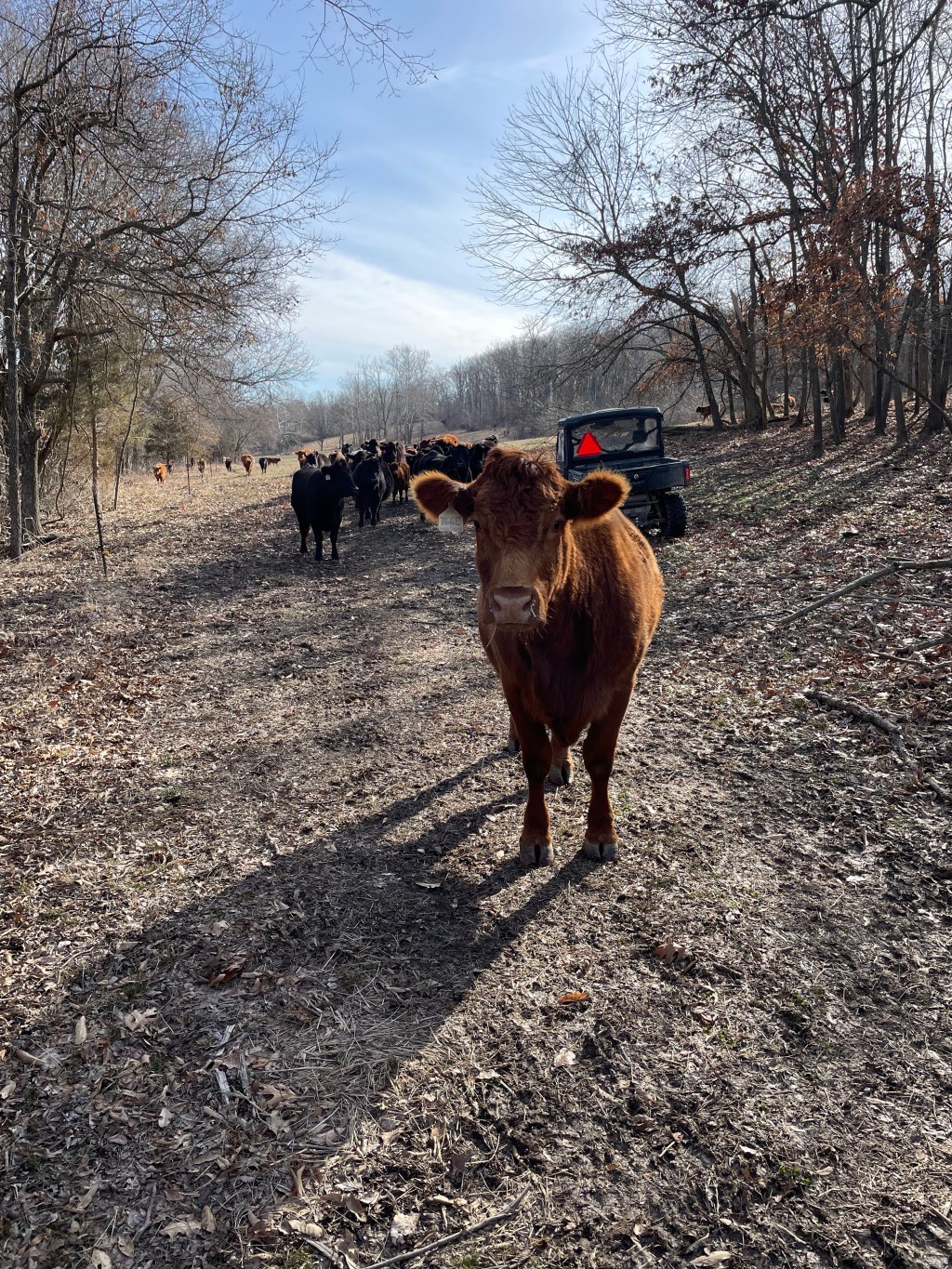
In the beginning, I called calves “baby cows.” Our neighbor Ruth was the one who finally corrected me.
“Ohhh, Melissa. In the Ozarks, we call them calves.”
She wasn’t being unkind. Quite the opposite.
Ruth became one of my first teachers in this new life. She’d lived here all her life, and over the years she sent me books she thought I should read, shared stories about the history of our area, and patiently filled in some of the gaps left by a lifetime spent somewhere else.
We’ve since lost Ruth, but I can still hear her voice whenever I think about those early “dumb city girl” days.
“In the Ozarks, we call them calves.”
And calves were just the beginning.
Soon I was learning that a heifer wasn’t simply a young cow, a bull wasn’t a steer, and there was an entire vocabulary I’d never needed before.
Eventually, I learned the words.
Then I had to learn what everything was for.
Take barn cats.
To city-girl me, a cat was a pet. It lived in the house, slept somewhere it probably wasn’t supposed to, and occasionally knocked things off the counter for no apparent reason.
So naturally, I wondered why we needed so many cats in the barn.
Mice.
Everyone on a ranch has a job, even the cats. And they eat mice, and apparently frogs. And, any barn cat willing to help enforce the removal of frogs has earned its keep.
Then there was the day I learned that owning a bull didn’t necessarily mean we were done shopping for bulls.
This seemed ridiculous. We already had a bull. He was standing right there. Why would we need another one?
And that’s when I learned there was a lot more to raising cattle than owning cows and a bull.
Because eventually that bull has daughters in the herd. And those daughters grow up. And cattle, as it turns out, have absolutely no respect for a family tree.
Suddenly pedigrees mattered. Bloodlines mattered. Which females were related to which bulls mattered.
A question that started as, “Why can’t we just keep using the same bull?” eventually turned into questions about genetics, breeding goals, EPDs and what a particular mating might add, or take away, from the next generation.
I didn’t stop asking questions.
I just learned enough to ask harder ones.
And apparently, I wasn’t the only city girl learning a new way of life. The kids were changing right alongside me.
One of my earliest Farm Journal entries documented the afternoon I was backing out of the driveway to take Abbi to soccer practice and spotted our pigs happily eating spring grass in the front yard.
Tom was 20 miles away helping someone fence another ranch.
My first instinct was to call him in a panic.
Instead, I put the truck in park and told the kids we weren’t going anywhere until we figured out how to get the pigs back in the barn.
Thirty minutes and what I described at the time as “about 27 Plan B’s” later, the four of us had done it.
I wrote that if there were merit badges for transitioning to country life, we’d probably earned three or four that afternoon.
Because none of us really knew what we were doing yet. We were just learning how to figure it out together.
Not long after we moved here, they were staying with Grampa Brown when severe weather rolled through the area. They saw warnings on television mentioning towns and counties they’d barely heard of and had absolutely no idea whether any of them were close to us.
To make matters worse, cell service at the ranch was practically nonexistent back then, so they couldn’t get ahold of us.
As far as they knew, a tornado was headed straight for the house.
It wasn’t.
But at the time, they didn’t know enough about their new home to know that.
I think about that story now and laugh. The names on the weather map aren’t just names anymore. The kids know which towns are down the road, which counties border ours, and whether a storm moving through one of them is headed our direction.
Now, if the weather report mentions Polk, Hickory, Camden, or Laclede county, they know exactly where to look. Those aren’t just names scrolling across the bottom of the television anymore. They’re places we know.
This is home.
And maybe that’s the best record of what all those “dumb city girl” questions have done. At first, they were about learning facts.
What’s a heifer?
Why do we need a barn cat?
Why can’t we keep using the same bull?
Where exactly is that county?
But eventually, the questions changed.
One of the first things I noticed about experienced cattle people was that they could look across a pasture and see things I couldn’t. Someone would say, “Something’s not right with that cow.”
I’d look. She looked like a cow. Four legs. Eating grass. Nothing obviously falling off.
Looked fine to me.
Then they’d point out that she was standing away from the herd. Or she wasn’t eating. Or her ears looked different. Or she wasn’t moving quite right.
Things I couldn’t see because I didn’t know yet that I was supposed to be looking for them.
That may be the biggest difference between the woman who first stepped into these pastures and the one standing in them today. I still don’t always know what’s wrong. But now I notice when something isn’t right.
I notice the cow standing alone.
I notice the calf that isn’t acting like the others.
I know enough about a pedigree to stop and ask whether a breeding makes sense.
I know why the barn cats are in the barn.
And for the record, I haven’t called one a baby cow in years. Well … probably.
I used to think becoming a rancher meant eventually knowing all the answers.
I know better now.
There will always be something else to learn, another problem we haven’t seen before, and another question we didn’t know we needed to ask. So yes, I still ask “dumb city girl” questions.
I hope I always do.
They’re just better questions now.
And apparently, somewhere along the way, I also became the kind of woman who thinks a brooder full of chicks on the kitchen counter, cattle vaccines next to the milk in the fridge, and calf bottles washed alongside the supper dishes are all perfectly reasonable.
Grampa Brown was right. I got used to it…
Frogs, however, still belong outside.


Leave a Reply