Shoo Fly, Don’t Bother Us
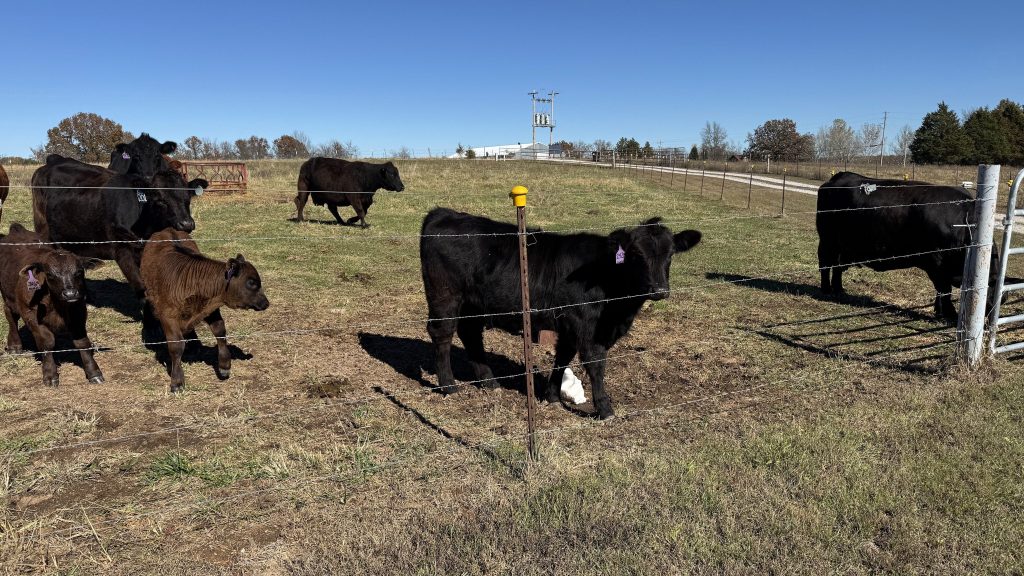
The spring and summer pasture is full of life. New grass, new calves, and lots and lots of bugs. In the pasture, there are good insects and bad insects and it is up to us to protect the herd from the bad guys.
Among the bad guys are the pesky external parasites: flies, mosquitoes, lice, ticks, and mites. We all know how annoying and uncomfortable flies and mosquitoes can make an afternoon outside. It is just as uncomfortable for the cows, who have to stomp in fence corners, swish their tails, swing their heads, or hide in a pond to flight the flies.
Winged parasites reduce cattle weight gain by sucking blood and causing discomfort and irritation that disrupts grazing. Lost grazing time means poor weight gain, less milk production, and sometimes lower conception rates during breeding season.
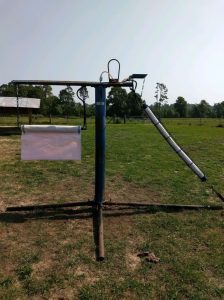
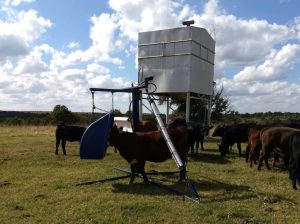
One way we can protect the herd is by treating them for parasites. Treatments can come in many different ways. Some cattlemen use pour-on chemicals and sprays or ear tags. But the problem with these treatments is that they require regular reapplication, which is disruptive to the herd and can cause un-needed stress. Other options include back rubbers or dust bags, which we have placed on the ranch. But, we have also enlisted in the support of a cattle oiler.
This device applies hide-deep topical insecticide as they satisfy their natural instinct to scratch. The insecticide leaves a residue on the cattle’s coat and hide to kill pests on contact. As fly season wears on, fly populations generally increase. The oiler offers year-long re-treatment, which insures the insecticide remains at full strength to kill pests as long as they are present.
While pest control programs will never eliminate all of the external parasites, they can go a long way toward keeping our cattle healthy and comfortable through the summer.

 LAAN Limousin Cattle Ranch
Leave a comment